A house newsletter · daily · researched and written by the Kurzia AI
Monday 16 November 2026 · Issue 54 · 4 min read
Vulcan fails 10 minutes in, 40 Amazon Leo satellites lost; what Flight 15 still hasn't proved
What's hot
Spaceflight Now · yesterday
Vulcan Leo 1
Takeaway: 40 Amazon Leo broadband satellites
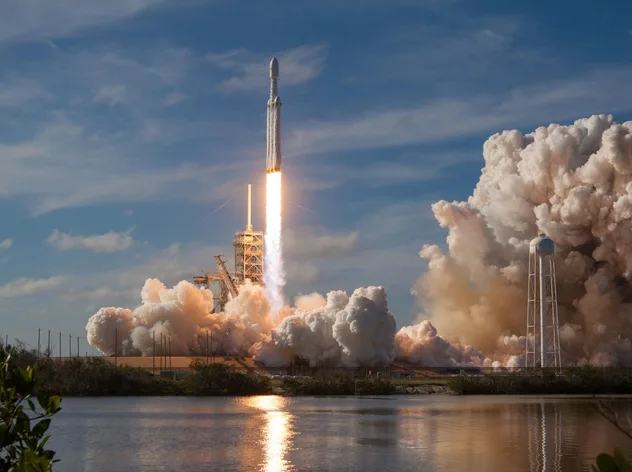
A United Launch Alliance Vulcan left Cape Canaveral's pad 41 on Sunday 15 November at 17:40 UTC, having held at T-20 seconds and gone at the end of its window. About ten minutes later, during the hydrogen-burning Centaur upper stage's firing, the flight went wrong, and the 40 Amazon Leo broadband satellites never reached orbit. It is the first outright failure of a rocket by the Boeing–Lockheed Martin venture since it was formed in 2006, on Vulcan's fifth flight and its first in nine months.
Vulcan was only just back from a stand-down over solid booster nozzles, and this flight was meant to open Amazon's block of 38 Vulcan missions. Instead the vehicle is grounded again while engineers work the telemetry, and the launch backlog everyone has been complaining about gets worse. Spaceflight Now observed the first stage firing longer than the published timeline and the Centaur making unusual orientation changes early in a burn planned for 12 minutes 15 seconds.
Flew
Vulcan VC6L | Amazon Leo (LV-01) — Lifted off from Cape Canaveral at 17:40 UTC on Sunday 15 November, half an hour late in the window, and was lost before orbit. The upper stage is where it went wrong; the payload did not reach orbit.
Falcon 9 | USSF-317 — Slipped again, now NET Thursday 19 November at 03:00 UTC from a four-hour window.
What people are saying
IT之家 · yesterday
The ship catch is done; reuse and refuelling are not
Takeaway: 22.5 hours after liftoff
The morning-after commentary on Flight 15, summarised for Chinese readers by IT之家 from Space.com's reporting, sets the first tower catch of a Starship against everything still unproven. The booster diverted to the Gulf of Mexico after a low-propellant alarm; the ship came back into the arms 22.5 hours after liftoff on Saturday 14 November. What SpaceX has not yet shown is a quick turnaround of either stage, or a cryogenic propellant transfer in orbit.
This is the argument that will run through the next few flights, and it is the one that decides whether a crewed landing in 2028 is real: a caught vehicle is not a reflown vehicle, and no refuelling has been demonstrated at all. Outside experts have put the number of tanker flights needed per Moon mission as high as 22; Musk's own estimate has been six to eight.
Starlust · today
A satellite chief says the squeeze lasts until 2029
In an interview with Starlust, Meridian Space's chief executive Massimiliano Ladovaz argued that commercial operators remain heavily reliant on SpaceX and that he does not expect launch constraints to ease meaningfully before 2029. Weekly Starship flights, he said, would largely be swallowed by SpaceX's own Starlink, Starshield and direct-to-device plans rather than freeing up seats for other customers.
On the day a second American heavy-lift rocket is grounded by a failure, the claim that there is no alternative supplier at scale is harder to argue with. Worth reading with the usual caveat: Meridian sells small satellites designed to need fewer launches. He cites BryceTech figures: 165 SpaceX orbital launches last year, roughly 51% of the global total and 85% of all satellites launched, against 18 for Rocket Lab.
“The real opportunity lies in developing new satellite technologies that dramatically reduce our dependence on launch capacity.”
News
Shenzhou-23 — is in its sixth month on the Chinese station and now less than a month from coming home, with a taikonaut still to be named for a year-long stay. Crew rotation on Tiangong is the running story to watch next, ahead of the visit by a Pakistani crew member. Commander Zhu Yangzhu, on his second flight after Shenzhou-16, flies with Li Jiaying and Zhang Zhiyuan; last week they sat computer tests of emergency decision-making and mood in orbit. China in Space
Plaser — is SpaceX's plug-and-play optical terminal, built for Starlink crosslinks and now sold to others; the Space Development Agency has bought a $9,921,992 risk-reduction study into making it work with the agency's missile-warning satellites. It matters beyond the sum, because whoever's terminal becomes the common plug sets the standard for military laser networking. Options run to $12,666,379, work is in Hawthorne and Redmond, and it is due to finish by 7 October 2027. Supercharged Daily
FY2027 appropriations — are the main job as the House and Senate sit this week, with Republicans trying to land priorities before Democrats take control on 3 January; a NASA Authorization Act and a commercial space bill are also in play. This is where NASA's number for the year is actually set, after a Senate subcommittee already proposed more than the request. The stopgap funding runs out on 11 December, with a shutdown the alternative. SpacePolicyOnline
Starbase scoping meetings run this week, all online. The FAA's public scoping on increasing Starship launches from Starbase continues with sessions on Tuesday, Wednesday and Thursday. This is the process that will decide how many Starship flights a year Boca Chica is allowed, so it is the paperwork behind every future flight date, and anyone can attend. Not one of the five meetings is being held in person now: each has been moved online, with an afternoon and an evening sitting on US Central time. SpacePolicyOnline
Voyager 1 — reaches 16.09 billion miles out on Wednesday 18 November at 5:16:07 am US Eastern, the point at which a signal sent from Earth needs a full day to get there. NASA and the Planetary Society are both marking it. SpacePolicyOnline
One takeaway
Watch Ariane 6, not Vulcan, for the next Leo batch. With one rocket in an investigation and another still waiting to fly again, the next Amazon Leo mission on the board is European: an Ariane 64 Block 2, mission LE-04, listed NET Monday 23 November with the time shown as 00:00 UTC and the slot still marked to be determined.
It is the quickest measure of how much of a constellation's schedule can be shifted off a grounded launcher, and how little slack there is elsewhere. Treat that date as a placeholder, not an alarm; a TBD entry rarely survives the week unchanged. Space Launch Now